

A Complete Guide to Various Types of Medical Stretchers
Posted by Cevi Med on 12th Dec 2025
Selecting the right stretcher shapes patient safety, staff efficiency, and transport success across clinics, hospitals, and field response. The market offers many designs, each tailored to specific environments and clinical needs. This guide breaks down capabilities, limitations, and use cases so that your team can match equipment to real-world scenarios.
Before exploring individual models, anchor on the basics: patient condition, movement pathway, staffing levels, and storage constraints. These factors influence frame construction, wheel systems, accessory compatibility, and cleaning requirements. Budget matters, yet total value also includes durability, ease of decontamination, and service support.
Clinicians, administrators, and procurement leaders will find clear, practical explanations here. By the end, your team will recognize how features translate into safer handling and smoother transfers. The overview below introduces various types of medical stretchers you will encounter most often, followed by actionable guidance on selection.
Types of Medical Stretchers
Wheeled Stretchers
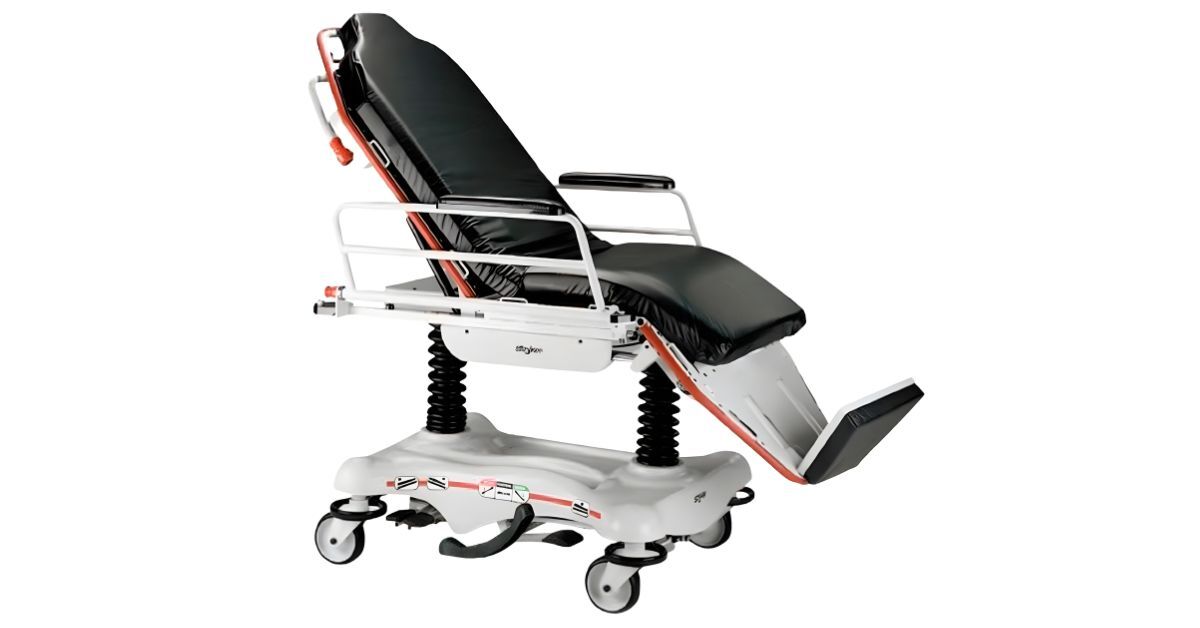
Wheeled stretchers, often called gurneys, remain the default choice for ambulance and in-hospital transport. Most models feature height adjustment, side rails, integrated IV poles, and factory mounting points for monitors or oxygen cylinders. Hydraulic or electric lift systems reduce strain during loading, while larger casters improve maneuverability on smooth floors.
These stretchers excel in corridors, elevators, and ambulance bays. Patient comfort often improves with thicker mattresses and adjustable backrests. Limitations may show when using this option in tight staircases, rugged outdoor terrain, or narrow doorways. Many teams pair a wheeled stretcher with auxiliary devices, such as a stair chair or scoop stretcher, to bridge those scenarios safely.
Basket Stretchers
Basket stretchers, sometimes called Stokes baskets, provide rigid, wraparound protection for challenging rescues. Durable shells made from steel, aluminum, or composite materials shield the patient during vertical lifts, confined-space extrication, or uneven ground movement. Multiple restraint points and integrated lifting slings support secure hoisting.
Emergency teams rely on baskets in wilderness, industrial, and maritime settings. Some models add flotation or insulated liners for cold environments. Weight and bulk represent trade-offs, especially during long carries. Storage space and hoisting hardware compatibility also require planning. When vertical or off-road movement is likely, a basket stretcher offers unmatched stability and containment.
Stair Chairs
Stair chairs enable safe movement through stairwells, narrow hallways, and small elevators where gurneys cannot pass. Lightweight frames, braking systems, and track-style treads allow controlled descents with fewer staff. Compact folding designs simplify storage in ambulances and closets, preserving space for other critical equipment.
These chairs work best for seated, stable patients without suspected spinal trauma. Many models include adjustable footrests, extendable handles, and quick-release belts for secure positioning. Load limits trend lower than full-size stretchers, so patient weight and condition must be evaluated carefully. When tight access creates risk, stair chairs reduce lift effort and improve control.
Bariatric Stretchers
Bariatric stretchers incorporate reinforced frames, wider surfaces, and higher weight capacities to support larger patients safely. Heavy-duty wheels, brakes, and undercarriage components handle higher loads across long corridors and ramp transitions. Some models include powered drive systems or fifth-wheel steering for easier movement.
Teams benefit from extended side rails, thicker mattresses, and robust attachment points for accessories. Room-to-room logistics deserve attention, including door widths, elevator dimensions, and turning radiuses. Staff training on handling techniques and transfer aids further reduces risk. Facilities serving diverse populations should plan for bariatric capacity as part of their core readiness initiatives.
Folding Stretchers
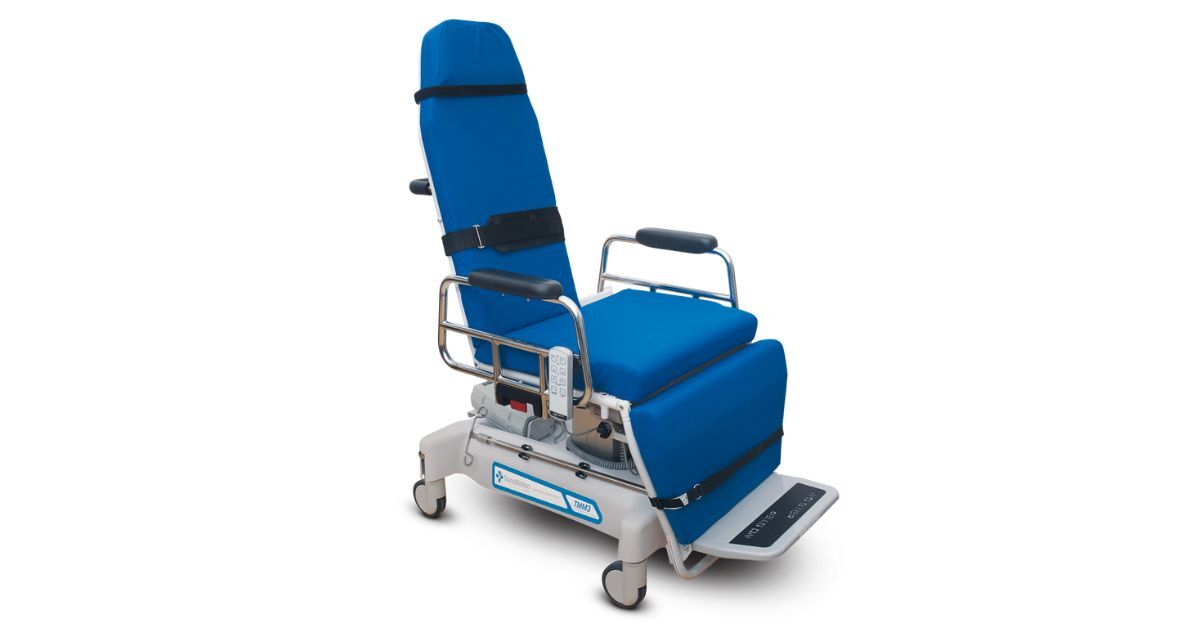
Folding stretchers prioritize portability, speed, and compact storage. Lightweight frames with fabric beds deploy quickly during mass events, clinics, or disaster response. Many versions fold down to fit in vehicles, closets, or wall-mounted cabinets, supporting rapid staging across multiple care zones.
These stretchers suit short-distance moves and temporary holding areas. The minimal frame limits spinal support and patient repositioning options. Lack of integrated wheels means teams must carry the load, so staffing levels and patient weight influence safe use. When space, speed, and surge capacity drive decisions, folding designs deliver practical flexibility.
Scoop Stretchers
Scoop stretchers split into two longitudinal halves that slide beneath a patient and lock together, reducing movement during lifting. This approach helps when triage suggests spinal, pelvic, or hip injuries, as it avoids full logrolling. Radiolucent materials often allow imaging without transferring the patient.
Field teams commonly use a scoop to lift and then transition the patient onto a wheeled stretcher or backboard. Comfort improves over backboards for short intervals, but scoops are not intended for long transport. Secure strapping and neutral alignment remain essential throughout the process. When careful lifting is priority one, a scoop stretcher is the best solution.
Choosing the Right Stretcher
- Load capacity and size: Match weight rating, surface width, and frame length to your patient population and procedures. Bariatric readiness improves safety and reduces transfer risks. Accessory needs, such as rails and IV mounts, should align with your typical care pathways.
- Portability and storage: Evaluate where the stretcher will live, how it deploys, and who will move it. Compact folding models shine during surge events or mobile clinics. Wheeled units with power assist reduce strain during long transports and frequent transfers.
- Terrain and accessibility: Map the transport route from bedside to vehicle, including thresholds, ramps, elevators, and stairs. Stair chairs handle tight spaces; baskets handle rugged environments. Wheeled stretchers excel on smooth floors and ambulance docks with load-assist systems.
Selecting the Appropriate Stretcher for Your Needs
Every facility balances patient mix, layout, and staffing with cost and longevity. The safest plan starts with realistic scenarios, not spec sheets alone. Walk the actual routes, trial devices with your team, and confirm compatibility with your existing gear, disinfectants, and storage spaces.
Wheeled stretchers carry most daily work. Stair chairs unlock difficult passages. Basket and scoop stretchers mitigate specific risks during rescue and trauma. Bariatric units protect patients and staff where higher capacities are routine. Folding units deliver speed and flexibility during events and surge response.
Equipment decisions are easier when performance, service, and budget align. Cevi Med supports that balance with quality refurbished options, warranty-backed assurance, and responsive customer support. Practices and hospitals seeking reliable medical office equipment will find stretchers, hospital beds, and more that suit growth and compliance goals. The right partner simplifies procurement, protects budgets, and keeps teams focused on care.
Ready to upgrade transport readiness without overspending? Visit Cevi Med for stretcher solutions and complementary medical office equipment that fit your workflows and timeline. The best match becomes clear when features meet real use cases, and support continues after delivery. There are various types of medical stretchers that can help you move your patients; let us help you find the best options for your practice.